A Learning Sciences Research Lab at the University of Wisconsin–Madison

What is ILDL?
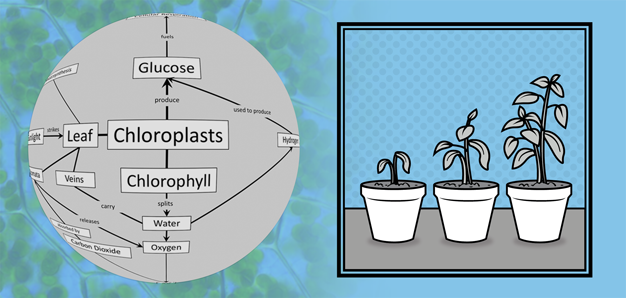
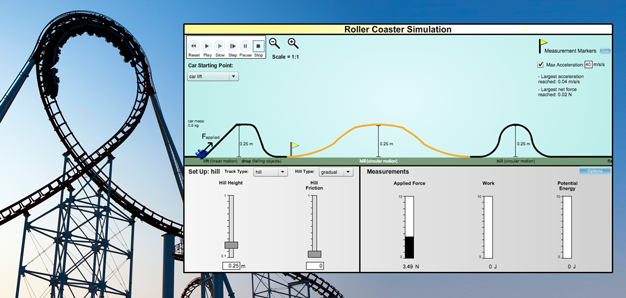
The central premise of our work is to design and implement innovative technology-rich learning environments that scaffold students’ science learning. Based at the Wisconsin Center for Education Research (WCER), our focus is to enable students to see the connections between science ideas and to learn the central ideas and networks of conceptual relationships, rather than a set of discrete facts. Check out our exciting new projects below.
News
- December 2023 – Puntambekar, Gnesdilow, and Yavuz’s paper, Understanding the effect of differences in prior knowledge on middle school students’ collaborative interactions and learning, was published online in the International Journal of Computer-Supported Collaborative Learning.
- January 2022 – Our paper, Supporting middle school students’ science talk: A comparison of physical and virtual labs, was chosen for the Research Worth Reading Award as one of three papers published in the Journal of Research in Science Teaching in the past year deemed to have the most significant impact on science educators.
- October 2021 – Gnesdilow and Puntambekar’s article, Comparing Middle School Students’ Science Explanations During Physical and Virtual Laboratories published online in the Journal of Science Education and Technology
- Puntambekar presents how distributed scaffolding can inform classroom orchestration at the Cognitive Institute at CU Boulder
- August 2021 – Puntambekar’s article, Distributed Scaffolding: Scaffolding Students in Classroom Environments published in Education Psychology Review
- Two new DRK-12 grants
- AI Institutes grant
- Info for prospective students
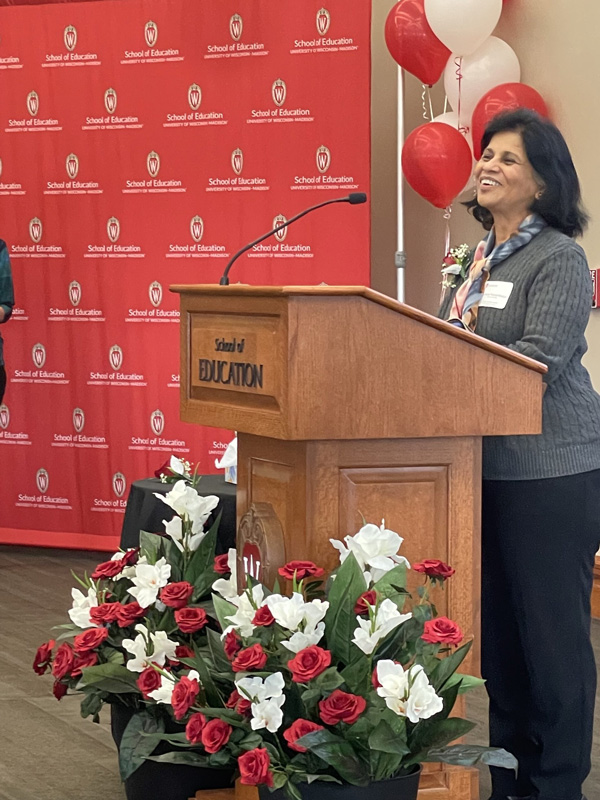
April 2022 – Puntambekar receives the Faculty Distinguished Achievement Award from the School of Education
Current Projects

SimSnap: Orchestrating Collaborative Learning in Biology Through Reconfigurable Simulations
SimSnap allows students to “join” iPads to create a shared screen to work on simulations in Biology. The goal of this project is to integrate learning across individual, group, and whole-class levels through innovative uses of technology. Middle school students will solve socio-scientific problems in biology as they seamlessly collaborate using simulations on iPads.
Funded by NSF’s DRK-12 program.

Scaffolding Science Learning and Teaching Through Automated Wise Crowd Analysis of Students’ Writing
Writing evidence-based explanations is a key aspect of learning science. This project will support students’ explanations in science through an innovative automated assessment system. The system will provide real-time feedback to students on science explanations. It will also provide teachers with summaries of students’ writing.
Funded by NSF’s DRK-12 program.

NSF AI Institute for Student-AI Teaming
This institute will develop models for human-AI collaboration in next-generation collaborative learning environments that involve students and AI agents. The aim of the institute is to advance theoretical frameworks and novel learning architectures for the effective orchestration of student-teacher interactions with AI learning partners.
Funded by NSF AI Institutes program.